
Beginner's Guide to Home Cardio: Walking, Marching, and Low-Impact Moves
Cardio does not have to mean running, jumping, or gasping for air. If you are just starting out, have sensitive knees, live in a small flat, or simply hate high-impact exercise, low-impact home cardio is a real and effective option. Walking in place, marching, step touches, and gentle dance-style moves can raise your heart rate, improve your stamina, and lift your mood — all without a single jump. This guide shows you how to start, how to build up, and how to put together a cardio session in your own living room.
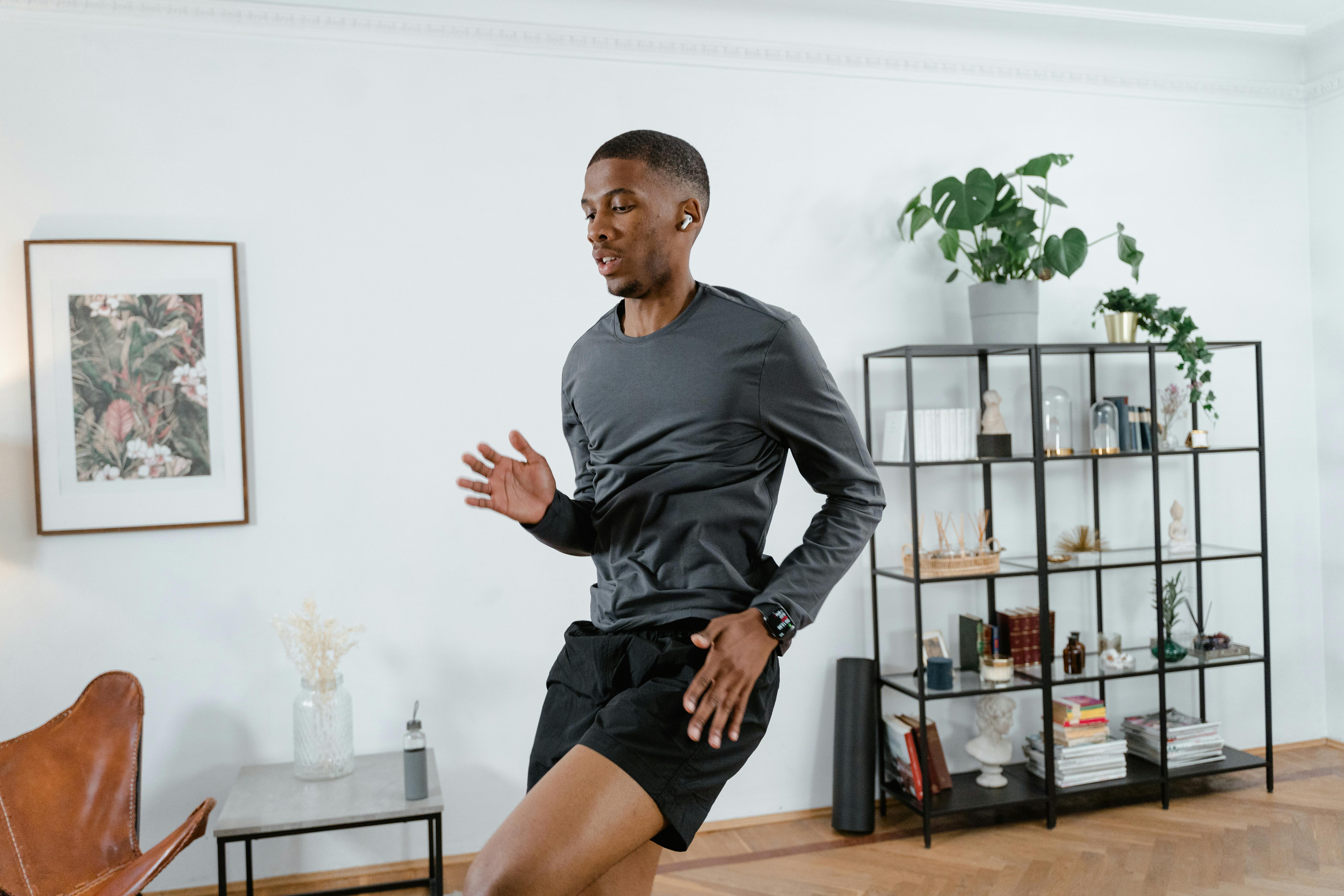
What Is Low-Impact Cardio?
Low-impact cardio is any exercise that raises your heart rate while keeping at least one foot on the ground at all times. That simple rule is what protects your joints: without the landing forces of jumping and running, your knees, ankles, and hips take far less stress. Walking, marching, cycling, swimming, and step touches all count.
Low-impact does not mean low-effort. Brisk walking in place with big arm swings can push your heart rate into the same zone as a slow jog, especially if you are new to exercise. The key is pace and arm movement: move briskly, swing your arms, and keep going for a sustained period. Twenty minutes of purposeful marching beats five minutes of half-hearted jumping every time.
Why Start With Low-Impact Cardio at Home
- Joint-friendly: No pounding means less knee and ankle soreness, which is the reason many beginners quit.
- No equipment needed: Your living room floor and a pair of comfortable shoes are enough.
- Neighbour-friendly: No jumping means no thumping through the ceiling — ideal for flats and apartments.
- Easy to scale: Speed up, add arm movements, or extend the time when you get fitter.
- Beginner-proof: The moves are natural. If you can walk, you can do low-impact cardio.
The Core Moves
You only need a handful of moves to build a full session. Learn each one at a slow pace first, then combine them.
1. March in place
Stand tall and lift your knees alternately, like marching on the spot. Swing your arms in rhythm. Start slowly and build to a brisk pace. This is your home base — return to it between harder moves.
2. Step touch
Step to the side with one foot, bring the other foot to meet it, then step back the other way. Add a gentle side-to-side sway and arm swing. Step touches are great for warming up and for active recovery between bursts.
3. Walking laps
Walk a loop around your home — living room to hallway to kitchen and back. It sounds simple, and it is, but ten minutes of purposeful indoor walking with good posture is a genuine workout, especially in a small space. Swing your arms and keep a brisk pace.
4. Knee lifts with a twist
March in place, and as each knee comes up, twist your torso gently toward it, bringing the opposite elbow toward the knee. This adds core work and coordination to a simple move.
5. Side steps with arm raises
Step side to side while raising both arms overhead on each step out, then lowering them as you step in. This raises your heart rate quickly without any jumping.
6. Heel digs and toe taps
Alternate tapping your heels forward and your toes behind you, keeping a light bounce in your knees. These are gentle on the joints and excellent for coordination.

A 20-Minute Beginner Cardio Session
Here is a complete session you can do three times a week. No equipment, no jumping, and you can do it in pyjamas if you like.
- Warm-up (3 minutes): Easy marching in place, then step touches. Move slowly and let your body warm up.
- Main set (12 minutes): Repeat this four-minute round three times: 1 minute brisk marching, 1 minute step touches with arm raises, 1 minute walking laps around your home, 1 minute knee lifts with a twist.
- Cool-down (5 minutes): Slow marching for two minutes, then gentle stretches for your calves, thighs, and shoulders. Breathe slowly until your heart rate settles.
During the main set, you should be able to talk in short sentences but not sing. That is the right intensity for a beginner. If you can chat easily, speed up or add bigger arm movements. If you cannot speak at all, slow down.
How to Progress Week by Week
Progress keeps cardio interesting and keeps your fitness improving. Change only one thing at a time.
- Week 1–2: 15 to 20 minutes, three days a week, comfortable pace.
- Week 3–4: Extend sessions to 25 minutes, or add a fourth day.
- Week 5–6: Add short bursts: 30 seconds of faster marching followed by 60 seconds of easy marching, repeated five times inside your session.
- Week 7–8: Try 30-minute sessions, and add new moves like side steps with arm raises or gentle grapevine steps.
If a week feels hard, repeat it before moving on. There is no rush, and steady progress beats a fast start followed by burnout.
Tips That Make Home Cardio Stick
- Put on music: A playlist with a steady beat makes marching feel natural and keeps your pace honest.
- Use a timer, not willpower: Set a timer for your session so you are not watching the clock.
- Wear proper shoes: Even indoors, supportive shoes protect your feet and ankles during longer sessions.
- Clear a small space: You need roughly two square metres. Move the coffee table, not the furniture.
- Track your sessions: Mark each completed workout on a calendar. A growing chain of marks is a powerful motivator.
- Pair it with a habit: Do your cardio before breakfast, after lunch, or while dinner cooks — attaching it to an existing routine makes it automatic.
Common Beginner Mistakes
Most beginners make the same few mistakes with home cardio, and all of them are easy to fix. The first is going too hard on day one — sprinting through the first session, feeling wrecked, and then avoiding the next one. Start at a pace you could hold for the full session, not a pace that impresses you for two minutes. The second mistake is skipping the warm-up and cool-down, which leaves you stiff the next day and makes you dread the workout. The third is doing the same session at the same pace for months, then wondering why progress stopped. Your body adapts, so add a minute or a little speed every week or two. The final mistake is treating a missed day as a failure. One missed session changes nothing; the habit is built by the sessions you do, not the ones you miss.
Frequently Asked Questions
Is walking in place real exercise?
Yes. Brisk walking in place with arm swings raises your heart rate, burns energy, and improves stamina. It counts just as much as walking outside, as long as you keep the pace brisk and the duration meaningful.
How many minutes of cardio do beginners need?
A good starting point is 20 minutes, three times a week. Build toward 30 minutes, four to five times a week, over two months. Any amount is better than none — even ten minutes counts.
Can low-impact cardio help with weight loss?
Cardio supports weight management by burning energy and improving fitness, but lasting weight change also depends on eating habits and strength training. Think of cardio as one piece of a bigger picture, not a magic solution.
What if I have knee pain?
Low-impact moves are usually well tolerated, but sharp or worsening knee pain is a sign to stop and get advice from a doctor or physiotherapist. Keep steps small, avoid deep knee bends, and never push through sharp pain.
Conclusion
Home cardio does not need a treadmill, a jump rope, or a single jump. Brisk marching, step touches, walking laps, and knee lifts can build real stamina in 20 minutes, three times a week, in a space the size of a rug. Start slow, use music, track your sessions, and add a few minutes each week. Your heart, your knees, and your energy levels will all notice the difference.


