
Resistance Band Leg Workouts: Squats, Lunges, and Glute Work With Bands
Resistance bands are often treated as a warm-up tool or a backup plan for when the dumbbells are busy. That sells them short — especially for legs. Bands provide constant tension through the whole movement, they are gentle on the joints, and they are excellent for the glute and hip muscles that bodyweight squats sometimes miss. A single loop band and a long band can build a serious leg workout in a living room, with no heavy weights and no noise for the neighbours.
This guide covers the best band exercises for legs, how to set them up safely, and a complete workout you can do twice a week at home.

Why Bands Work So Well for Legs
Free weights get heaviest at the bottom of a movement and easier at the top, because of leverage. Bands do the opposite: the tension increases as the band stretches, so the top of a squat or a glute bridge — the part where the muscles are fully contracted — is the hardest part. That makes bands especially good for glutes, which respond well to strong contractions at the top of a movement.
Bands are also joint-friendly. The resistance is smooth and there is no heavy load pressing down on the spine, which matters if your knees or back are sensitive. And they are practical: a set of bands costs little, fits in a drawer, and travels anywhere. For a home leg workout, that combination is hard to beat.
Choosing the Right Bands
Two types cover almost everything:
- Loop bands (mini bands): Short, closed loops that sit just above the knees or around the ankles. Best for glute activation, lateral walks, clamshells, and adding resistance to squats and bridges.
- Long bands: Long, open bands with handles, or a long loop band you can stand on. Best for squats, deadlifts, and leg presses against a door anchor.
Start with a light or medium band. The right resistance lets you do twelve to fifteen clean repetitions with good form. If the band snaps your knees inward or you cannot finish the set, it is too strong. If you can do twenty reps without effort, move up a level. Check your bands regularly for nicks, tears, or worn spots — a damaged band can snap, so replace any band that looks worn.
The Core Band Leg Exercises
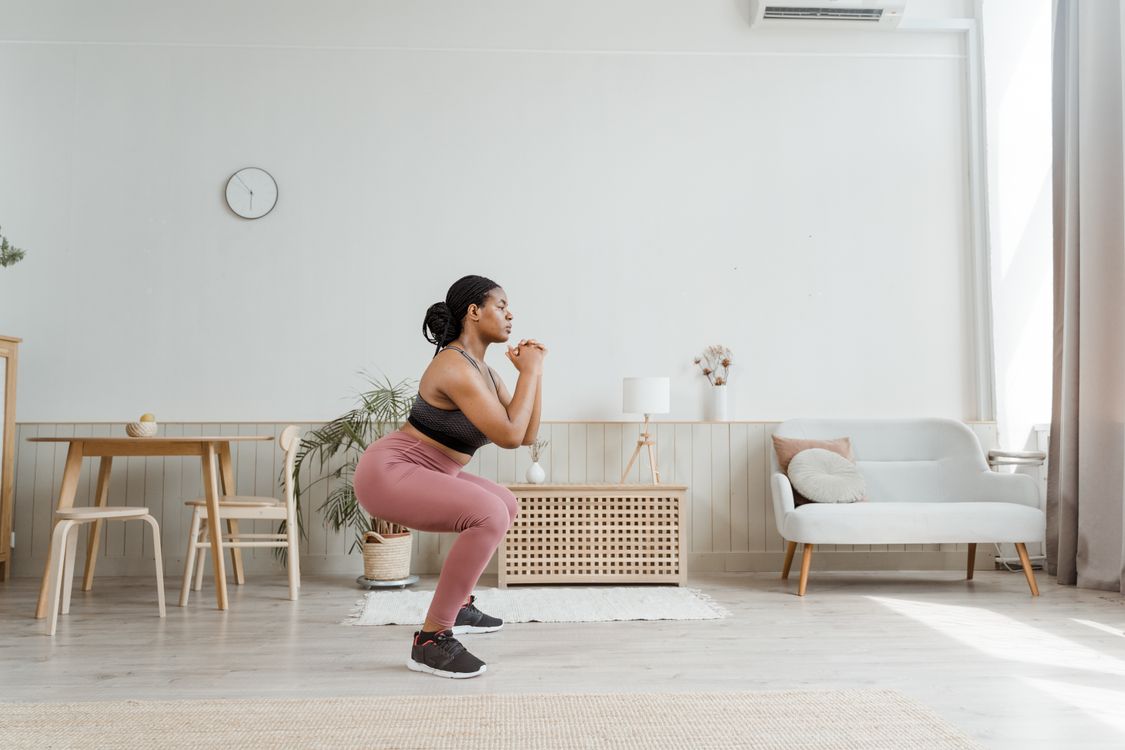
1. Banded squat. Stand on a long band with feet shoulder-width apart, holding the handles or the band at shoulder height. Squat down by pushing your hips back and bending your knees, keeping your chest up and your knees tracking over your toes. Drive up through your heels. Three sets of twelve to fifteen reps. The band adds resistance at the top, where bodyweight squats feel easiest.
2. Banded glute bridge. Lie on your back with knees bent and a loop band just above your knees. Press your knees gently outward against the band, then lift your hips by squeezing your glutes until your body forms a straight line from shoulders to knees. Hold for two seconds at the top, then lower slowly. Three sets of fifteen reps. This is one of the best glute exercises you can do anywhere.
3. Banded lateral walk. Place a loop band just above your knees, bend your knees slightly, and take small side steps, keeping tension on the band at all times. Ten steps one way, ten steps back. This targets the hip muscles that stabilise the knees and pelvis — the muscles that keep your squats and lunges steady.
4. Banded reverse lunge. Stand on a long band and hold the handles at your shoulders. Step one foot back into a lunge, lowering the back knee toward the floor, then drive through the front foot to return. Eight to ten reps per leg. The reverse lunge is easier on the knees than a forward lunge and trains balance at the same time.
5. Banded Romanian deadlift. Stand on a long band with feet hip-width apart, holding the band in front of your thighs. Hinge at the hips, pushing them back and lowering the band toward your shins with a flat back, then drive your hips forward to stand. Three sets of twelve reps. This trains the hamstrings and glutes and teaches the hip hinge.
6. Banded clamshell. Lie on your side with knees bent and a loop band just above your knees. Keeping your feet together, open the top knee like a clamshell, then close slowly. Twelve to fifteen reps per side. Small and unglamorous, but excellent for the deep hip muscles that support the knees.
7. Banded leg press (seated). Sit on the floor with legs extended, loop a long band around your feet, and hold the ends. Press your feet away by straightening your knees against the band's resistance. This is a useful option when standing exercises are uncomfortable.
A Complete 25-Minute Band Leg Workout
Warm up for five minutes with marching in place, leg swings, and ten bodyweight squats. Then do this circuit:
- Banded squat — 12 reps
- Banded glute bridge — 15 reps
- Banded reverse lunge — 8 reps per leg
- Banded Romanian deadlift — 12 reps
- Banded lateral walk — 10 steps each way
- Banded clamshell — 12 reps per side
Rest 60 seconds between exercises and two minutes after the full circuit. Repeat the circuit twice for a solid 25-minute session. Finish with five minutes of stretching for the quads, hamstrings, and hip flexors.
How to Progress With Bands
Progressing with bands is different from progressing with weights, because you cannot add two kilos to a band. Instead, progress in these ways:
- Move to a stronger band. When you can do fifteen clean reps of an exercise with your current band, step up to the next resistance level.
- Slow the tempo. Take three seconds to lower into each squat and two seconds to pause at the bottom. Slower reps make the same band feel much harder.
- Add a pause at the hardest point. Hold the top of each glute bridge for three seconds, or pause for two seconds at the bottom of each squat.
- Add a set. Go from two circuits to three when your fitness improves.
- Shorten the band. Choking up on a long band — gripping it shorter or standing wider on it — increases the tension without a new band.
Common Band Mistakes
- Letting the knees collapse inward. Bands pull the knees toward each other, especially in squats and bridges. Actively press your knees outward against the band on every rep. If you cannot keep them aligned, use a lighter band.
- Using momentum. Bouncing out of the bottom of a squat or snapping a bridge up quickly lets momentum do the work. Slow, controlled reps build more strength and protect the joints.
- Anchoring bands to something unsafe. Only anchor a band to something heavy and stable that will not move or tip — a heavy table leg, a closed door with a proper door anchor, or your own feet. Never anchor to a light chair or a door handle.
- Skipping the warm-up. Bands feel light, so it is tempting to jump straight in. Warm up first — cold hips and knees do not like sudden resistance.
Frequently Asked Questions
Can bands really build leg strength, or are they just for warming up? Bands can build real strength, especially for beginners and intermediates. Studies of resistance training show that muscles respond to tension and effort, not to the type of equipment. A band workout taken close to fatigue builds strength and muscle just like weights do — the key is progressive overload, which you achieve by using stronger bands, slower tempos, and more volume over time.
Are band workouts good for bad knees? Bands are often recommended for people with sensitive knees because the load is smooth and there is no heavy weight pressing down on the joint. Still, if you have a knee condition, start with the gentlest exercises — glute bridges and clamshells — and check with a health professional before adding squats and lunges.
How often should I do a band leg workout? Twice a week, with at least one rest day between sessions, is a good rhythm. On other days, walking and gentle stretching complement the work well.
How long do resistance bands last? With regular use, a good set of bands lasts many months. Store them away from direct sunlight and sharp objects, and inspect them before each session. Replace any band with visible damage.
Conclusion
Resistance bands turn a living room into a leg gym. They challenge the glutes and hips in ways bodyweight alone cannot, they are kind to the joints, and they cost almost nothing. Learn the seven exercises in this guide, run the 25-minute circuit twice a week, and progress by slowing the tempo or stepping up the resistance. Your squats will feel steadier, your knees will track better, and your glutes will finally get the work they have been missing.


