
How to Recover Faster After Home Workouts: Sleep, Stretching, and Active Rest
Most home workout plans focus on the training itself — the exercises, the sets, the schedule. Recovery gets a single line: "rest on your rest days." That is a missed opportunity, because recovery is when the body actually adapts. Muscles do not get stronger during a workout; they get stronger afterward, while you rest, sleep, and eat. A good recovery routine means less soreness, fewer injuries, and faster progress from the same amount of training.
This guide covers the three pillars of recovery at home — sleep, stretching and mobility, and active rest — plus the everyday habits that help or hurt recovery, and a simple weekly recovery plan you can start tonight.
Why Recovery Matters More Than You Think
Training is a controlled stress. Each session creates small amounts of muscle fatigue and micro-damage, and the body repairs it stronger than before — but only if it gets the time and resources to do so. Train hard every day without recovering, and the repair never finishes. The result is familiar: constant soreness, stalled progress, irritability, poor sleep, and eventually an injury or a burnout that forces a long break.
Good recovery is not laziness. It is part of training. The strongest home trainees are usually the ones who take their rest days as seriously as their workout days.
Pillar 1: Sleep — The Most Powerful Recovery Tool
Sleep is when most muscle repair happens. During deep sleep, the body releases growth hormone, repairs muscle tissue, and consolidates the motor skills practised during training. Short or poor-quality sleep undermines all of it. You can have a perfect workout plan and a perfect diet, but if you sleep five hours a night, your recovery will suffer.
Practical steps that help:
- Aim for seven to nine hours. Most adults need this range. If you train hard, you probably need the upper end of it.
- Keep a regular schedule. Going to bed and waking up at similar times — even on weekends — stabilises your body clock and improves sleep quality.
- Cool and dark. A cool, dark bedroom helps the body fall asleep and stay asleep. Heavy curtains or an eye mask and a fan can make a real difference.
- Cut screens before bed. The light and the stimulation of phones and laptops delay sleep. Put them away thirty to sixty minutes before bed, or at least switch to a dim, warm display.
- Avoid hard training late at night. Intense exercise raises body temperature and alertness, which can make it harder to fall asleep. If you train in the evening, finish at least two to three hours before bed, and keep the session moderate.
Pillar 2: Stretching and Mobility After Training
A short cool-down after each workout helps the body transition from effort to recovery. Five to ten minutes is enough. Focus on the muscles you just worked: quads and hamstrings after leg day, chest and shoulders after push-ups, hips and back after deadlifts. Hold each stretch for twenty to thirty seconds and breathe slowly. The goal is gentle relaxation, not aggressive stretching.
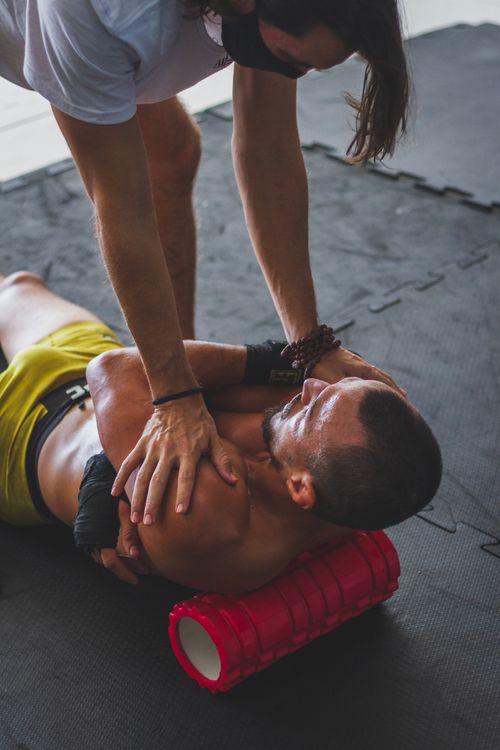
Foam rolling is a useful addition if you have a roller. Roll slowly over the thighs, calves, and upper back, pausing on tender spots for twenty to thirty seconds. It should feel like a firm massage — uncomfortable but not painful. Avoid rolling directly over joints or the lower back. Ten minutes of foam rolling after a hard session can noticeably reduce next-day soreness.
On rest days, a longer mobility session — fifteen minutes of gentle yoga or stretching — keeps the joints moving and the muscles supple. Rest days are for gentle movement, not for sitting still all day.
Pillar 3: Active Rest — Moving Without Training
Active rest means light movement on non-training days: walking, gentle cycling, easy swimming, or a slow stretch session. Light movement increases blood flow, which helps clear the waste products of hard training and delivers nutrients to recovering muscles. It also reduces the stiffness that comes from sitting still after a hard workout.
What active rest is not: a second workout. A brisk thirty-minute walk is active rest. A hard run or a heavy extra session is not. The intensity should feel easy — you should be able to hold a conversation comfortably throughout.
A good rule: on rest days, aim for a walk and some gentle stretching. That is enough. Your body does the repairing; your job is to give it blood flow, food, and sleep, and then get out of its way.
Food and Hydration: The Basics That Support Recovery
Recovery needs fuel. After a workout, eat a balanced meal with protein and carbohydrates within a couple of hours — protein supplies the building blocks for muscle repair, and carbohydrates replenish energy stores. You do not need special recovery shakes or supplements. Regular meals with a source of protein — eggs, lentils, chicken, yoghurt, beans, or fish — are enough for most home trainees.
Hydration matters too. Even mild dehydration makes muscles feel sorer and recovery slower. Drink water regularly through the day, and a little more on training days. If your workout was long and sweaty, a pinch of salt in your food and plenty of fluids help replace what you lost.
Signs You Are Not Recovering Enough
Watch for these warning signs. One bad day means nothing, but a pattern over two weeks means your recovery needs attention:
- Muscle soreness that lasts more than three days after a session.
- Weights or reps going down instead of up for two weeks in a row.
- Feeling tired all day despite sleeping enough.
- Trouble falling asleep or staying asleep.
- Feeling irritable, unmotivated, or dreading workouts you used to enjoy.
- Small aches that keep returning in the same place.
If several of these apply, take a lighter week: cut your training volume in half, keep the intensity easy, sleep more, and walk daily. A planned easy week is not a setback — it is how experienced trainees keep progressing for years.

A Simple Weekly Recovery Plan
- After every workout: Five minutes of stretching for the muscles you trained, plus water and a balanced meal within a couple of hours.
- Rest days: A twenty to thirty-minute walk and ten minutes of gentle stretching or foam rolling.
- Every night: A consistent bedtime, screens off thirty minutes before sleep, and a cool, dark room.
- Every week: At least one full rest day with no structured training, and one longer mobility session.
- Every four to six weeks: A lighter training week — reduce volume by about half — to let the body fully catch up.
Frequently Asked Questions
Should I stretch before or after a workout? Both, differently. Before a workout, do dynamic warm-ups — moving stretches like leg swings and arm circles. After a workout, do static stretches — holding a position for twenty to thirty seconds. Save the long, still stretches for after training.
Do I need a foam roller? No, but it helps if you get sore often. A tennis ball works for smaller areas like the calves and the upper back. Start gently — foam rolling should not be painful.
How much protein do I need for recovery? General guidance for active adults is roughly 1.2 to 1.6 grams of protein per kilogram of body weight per day, spread across meals. You do not need to count precisely — including a protein source at each meal usually gets you close enough.
Can I train if I am still sore? Mild soreness is fine — a light session or a different muscle group is usually okay. Severe soreness, or soreness that limits your movement, means you should rest that area and do something gentle instead.
Conclusion
Recovery is not the gap between workouts — it is half of the workout itself. Sleep seven to nine hours, stretch for five minutes after every session, move gently on rest days, eat well, and take a lighter week every month or so. Do that consistently, and the same training will produce better results with less soreness and fewer setbacks. The goal is not to train as hard as possible for as long as possible. It is to train well, recover well, and still be training happily a year from now.


