
How to Train Legs at Home Without Squats
Squats are the default leg exercise in almost every home workout plan, but they are not the only way to build strong legs — and for some people, they are not the best way. Knee discomfort, limited ankle mobility, lower-back sensitivity, or simply boredom can all make squats a poor fit. The good news is that the legs respond to many movements, not just one. You can build strong quads, hamstrings, glutes, and calves at home without a single squat.
This guide covers the best squat-free leg exercises, how to combine them into a complete workout, and how to progress without adding a barbell to your living room.
Why You Might Skip Squats
There are good reasons to train legs without squats, at least for a while. Knee pain during deep squats is common, especially if the knees track inward or the ankles are stiff. Lower-back discomfort can appear when the torso leans forward under load. Some people simply cannot reach a comfortable squat depth because of hip structure or mobility limits, and forcing depth makes things worse, not better.
None of this means your legs cannot get stronger. The leg muscles respond to tension and effort, not to one specific exercise. Lunges, step-ups, deadlifts, glute bridges, and calf raises all train the same muscles through different patterns — and using several of them together often builds more balanced legs than squats alone.
The Best Squat-Free Leg Exercises
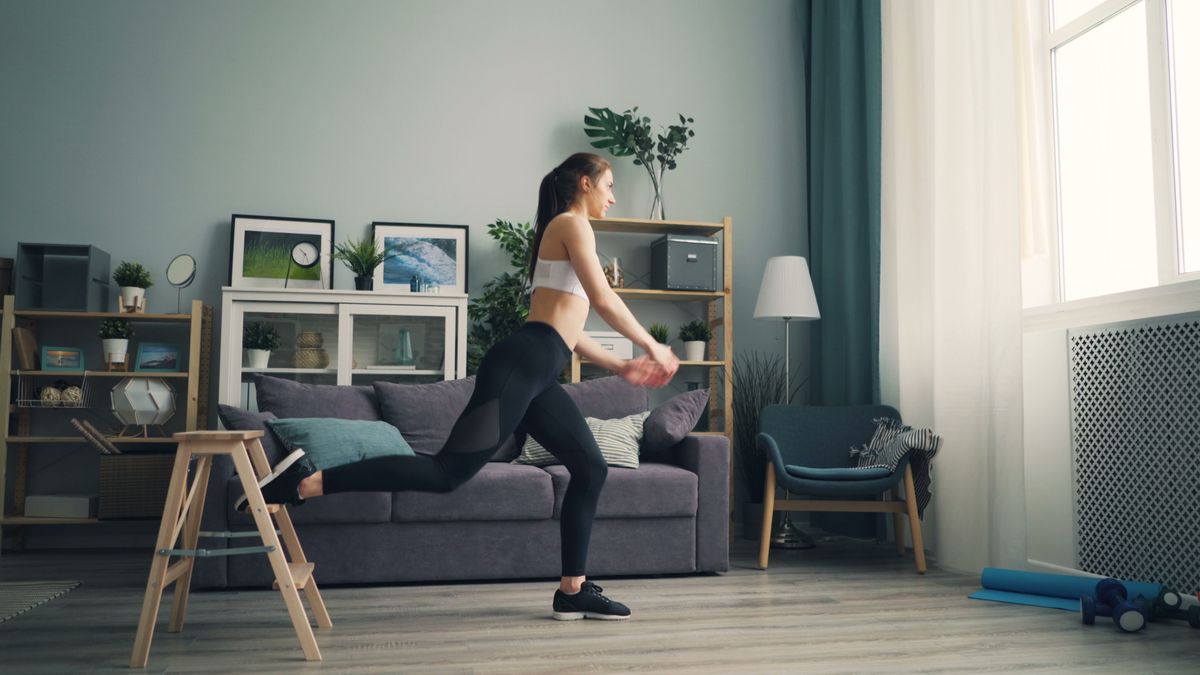
1. Reverse lunge. Step backward into a lunge, lowering the back knee toward the floor, then drive through the front foot to return. Reverse lunges train the quads and glutes with less knee stress than forward lunges. Three sets of eight to ten reps per leg.
2. Step-up. Step onto a sturdy low step, a stair, or a stable box with one foot, drive through the heel to stand up on it, then step down slowly. Step-ups are one of the most functional leg exercises there is — they are literally the movement of climbing stairs, loaded. Keep the step low at first, around knee height or lower. Three sets of eight to ten reps per leg.
3. Glute bridge. Lie on your back, knees bent, feet flat. Lift your hips by squeezing your glutes until your body forms a straight line from shoulders to knees, hold for two seconds, and lower slowly. Progress to single-leg bridges when two-legged bridges feel easy. Three sets of twelve to fifteen reps.
4. Romanian deadlift. Hold dumbbells or a kettlebell in front of your thighs, hinge at the hips with a flat back, and lower the weight toward your shins, then drive your hips forward to stand. This trains the hamstrings and glutes and teaches the hip hinge. Three sets of ten to twelve reps.
5. Bulgarian split squat. Rest your back foot on a chair behind you and squat on the front leg. This is the hardest exercise on this list and a serious leg builder. Start with bodyweight and hold a wall for balance. Three sets of eight reps per leg.
6. Lateral lunge. Step wide to the side, bend the stepping knee, and keep the other leg straight. This trains the inner thighs and the hip stabilisers that forward-and-back movements miss. Three sets of eight reps per side.
7. Calf raise. Stand on a step with your heels hanging off the edge, rise onto your toes, hold for two seconds, and lower slowly below the step level. Strong calves support the ankles and improve walking and balance. Three sets of fifteen reps.
8. Wall sit. Slide your back down a wall until your thighs are parallel to the floor, and hold. Wall sits build quad endurance without any joint movement, which makes them useful when knees are sensitive. Three holds of twenty to forty seconds.
A Complete Squat-Free Leg Workout
Warm up for five minutes with marching, leg swings, and gentle hip circles. Then do this circuit:
- Step-up — 8 reps per leg
- Romanian deadlift — 12 reps
- Reverse lunge — 10 reps per leg
- Glute bridge — 15 reps
- Lateral lunge — 8 reps per side
- Calf raise — 15 reps
Rest 60 seconds between exercises and two minutes after the full circuit. Repeat twice for a solid thirty-minute session. Finish with five minutes of stretching for the quads, hamstrings, and hip flexors.

How to Progress Without Squats
- Add weight gradually. Hold dumbbells for lunges, step-ups, and deadlifts. Even a small increase changes the exercise significantly.
- Slow the tempo. Take three seconds to lower into each rep and pause for two seconds at the hardest point. Slower reps make bodyweight exercises much harder.
- Move to single-leg versions. Single-leg glute bridges, single-leg Romanian deadlifts, and Bulgarian split squats all double the load on the working leg without adding weight.
- Add a set. Go from two circuits to three when the workout stops feeling challenging.
- Increase the range. A higher step for step-ups or a deeper hinge for deadlifts increases the demand — only as far as your form stays clean.
What About the Quads? The Hardest Muscle to Train Without Squats
The quadriceps are the one muscle group people worry about most when dropping squats, because squats load the quads heavily. The exercises in this guide do cover the quads — step-ups and reverse lunges both demand a lot from the front of the thigh, especially when you drive up through the heel and keep the torso upright. The Bulgarian split squat is the closest squat replacement of all: the front leg does almost all the work, the range is deep, and the load is high even with bodyweight alone.
One extra tip for quad development: slow down the lowering phase. A three-second descent on every step-up and lunge rep increases the time the quads spend under tension, which is a major driver of strength and muscle growth. You do not need heavy weights to challenge the quads — you need slow, controlled reps and a full range of motion. Wall sits also help, because they hold the quads under constant tension without any joint movement at all.
When to Return to Squats
Skipping squats does not have to be permanent. Many people return to them after a few weeks of building strength and mobility with the exercises in this guide. If knee or back discomfort was the reason you stopped, the step-ups, bridges, and deadlifts will have strengthened the muscles that support the squat pattern. When you try squats again, start with a shallow range — a chair squat, sitting back to a chair — and increase depth gradually over two to three weeks. If pain returns, stay with the squat-free routine and speak to a health professional.
And if you never return to squats, that is fine too. Strong legs do not require one specific exercise. They require consistent, progressive training of the quads, hamstrings, glutes, and calves — and this guide covers all four without a single squat.
Frequently Asked Questions
Can I build strong legs without squats? Yes. Squats are efficient, but they are not essential. Lunges, step-ups, deadlifts, and bridges train the same muscles. What matters is progressive overload — gradually making the exercises harder — not the specific exercise you choose.
Are step-ups as good as squats? For building single-leg strength and balance, step-ups are arguably better than squats, because each leg works independently. For maximum overall leg strength, squats have an edge because they allow heavier loading. At home, without a barbell, step-ups are an excellent substitute.
How often should I train legs without squats? Twice a week, with at least one rest day between sessions, is a good rhythm. The workout in this guide covers all the major leg muscles, so two sessions a week is enough for steady progress.
What if lunges also hurt my knees? Try reverse lunges first, which are easier on the knees than forward lunges. Shorten the step and keep the movement slow. If all lunging hurts, focus on glute bridges, deadlifts, wall sits, and calf raises, and speak to a health professional about the knee pain.
Conclusion
Squats are a great exercise, but they are not the only exercise. If they do not suit your knees, your back, or your body, you can still build strong, capable legs at home with step-ups, lunges, deadlifts, bridges, and calf raises. Use the workout in this guide twice a week, progress slowly, and let your legs get stronger on your terms. Strength is not about doing the exercise everyone else does — it is about finding the exercises your body can do well, and doing them consistently.


